How long does it take to get good at pickleball? Realistic timelines from first rally to 3.5+, what actually speeds progress up, and what quietly stalls it.
How long does it take to get good at pickleball? The honest answer has two parts. Part one: faster than any racquet sport you've tried — most people rally in their first hour and play real games within two or three sessions. Part two: "good" keeps moving, and the timeline from decent to genuinely strong depends far more on how you practise than how much. Here are realistic milestones, from a coach who watches these timelines play out every week in Vaughan.
The realistic milestones
- Hour 1-3: serving, returning, keeping short rallies alive. Pickleball's famously gentle learning curve is real.
- Weeks 2-6: playing full games comfortably, scoring without help — roughly the 3.0 range on the USA Pickleball skill scale, where serves land consistently but depth control is limited.
- Months 3-9: the club-player plateau, around 3.0-3.5. You sustain rallies and win social games; what's missing is the soft game under pressure.
- Year 1-2+: 3.5 to 4.0 — a strong grasp of both the soft and hard game, consistent third-shot drops, patience in dink rallies. This is the jump most players never make, and it's a practice-quality gap, not a talent gap.
Two caveats about those ranges: they assume you're playing at least twice a week, and they compress dramatically with early coaching — the milestones don't move, but the months between them do.
Why the first plateau happens to almost everyone
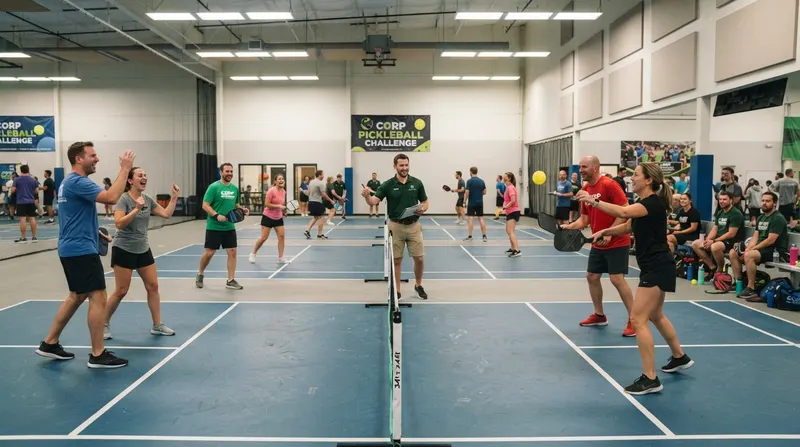
Getting to 3.0 requires only playing — open play supplies all the reps. Getting past 3.5 requires skills that open play never forces you to build: dropping instead of driving, resetting instead of counterattacking, staying patient through a twelve-shot dink rally. Nobody practises those voluntarily, because for the first two weeks you'll lose MORE while the new shot is raw. So players rack up hundreds of hours of open play that rehearse their existing habits, then wonder why year two looks identical to year one. Hours played is the wrong metric; deliberate hours is the one that predicts your level.
Open play makes you comfortable. Deliberate practice makes you better. Most players stall the day those two things stop being the same — usually around 3.5.
What actually speeds the timeline up
- Frequency over duration — three one-hour sessions a week beat one three-hour marathon, because motor skills consolidate between sessions.
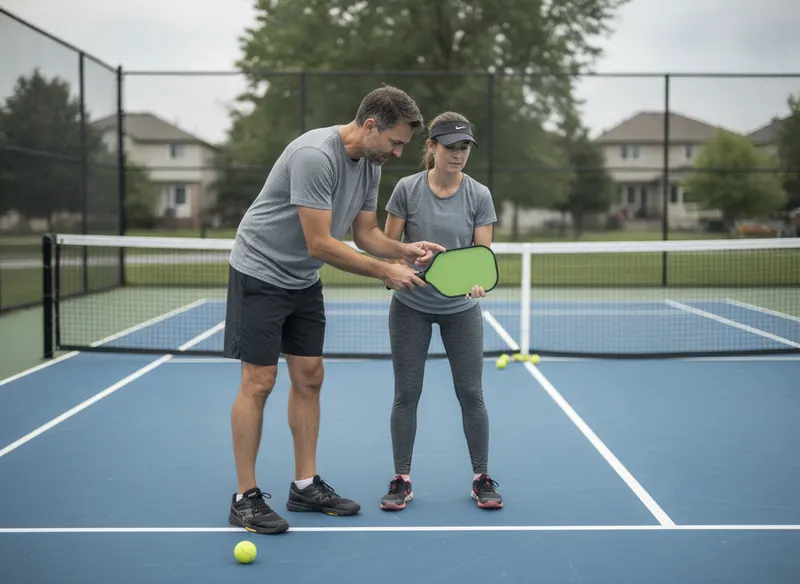
- Early feedback — a coach in your first month prevents the habits that otherwise cost you months to unlearn later. A few private pickleball lessons at the start compress the whole curve.
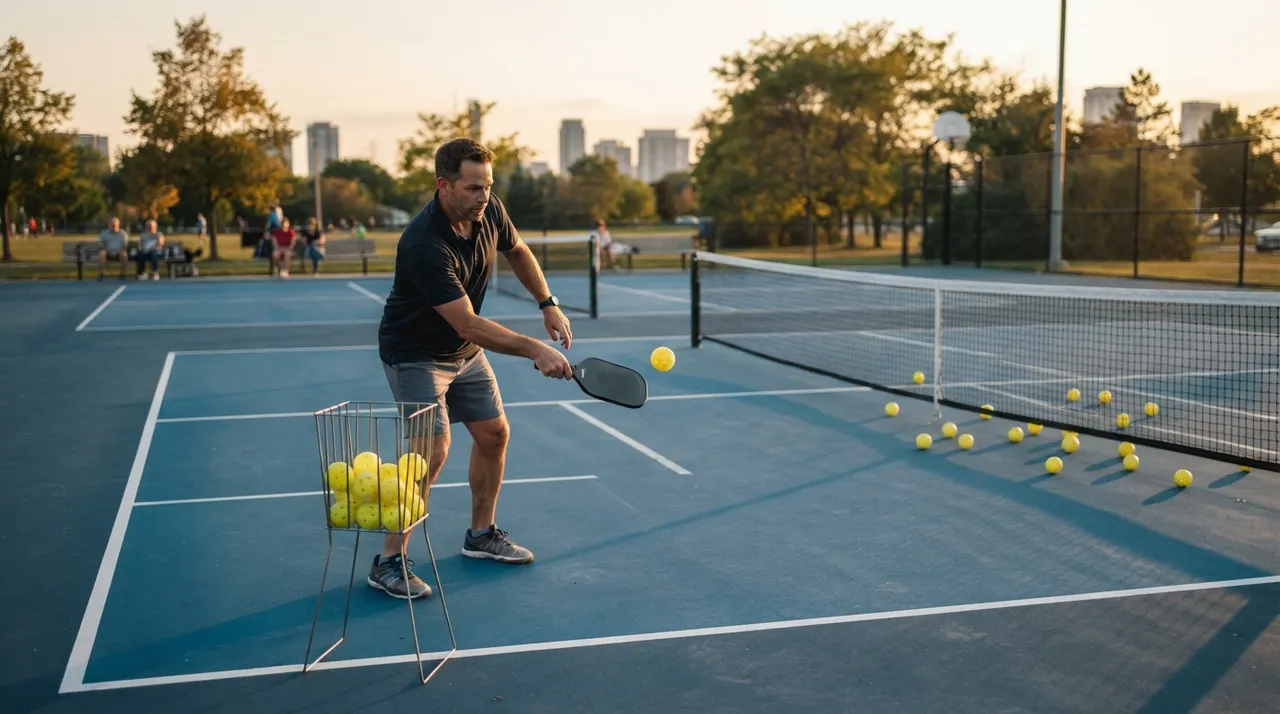
- Deliberate soft-game work — ten minutes of dinking and drops every session, before the fun games start, not after.
- Playing slightly up — regular games against players a half-step better, where you lose close and learn fast.
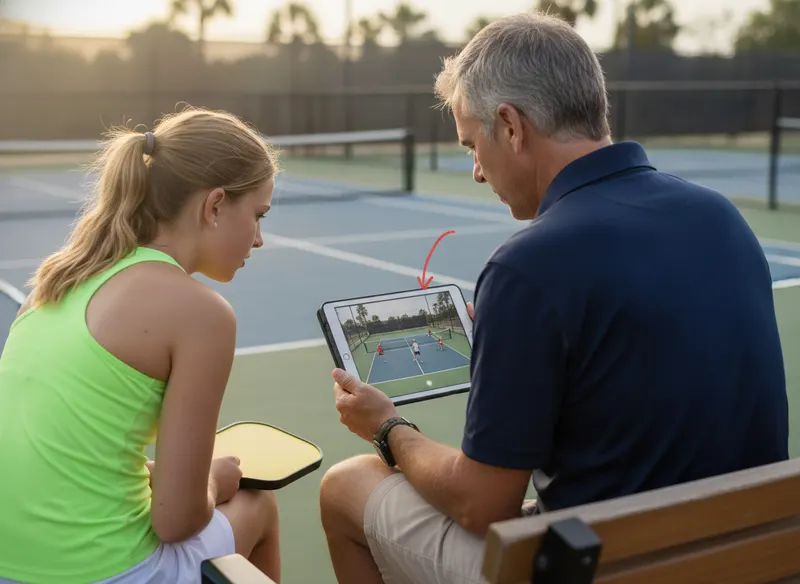
- Watching yourself — film removes the guesswork about what to fix; see our guide to recording and reviewing your own game.
Does age change the timeline?
Less than you'd think — and less than in any comparable sport. The small court and slow ball mean the early milestones arrive on roughly the same schedule at 65 as at 25; we watch it happen weekly. What shifts with age is the path, not the destination: older players typically build their game through the soft side first — dinks, placement, patience — which happens to be the side that wins recreational doubles anyway, while younger players burn months trying to overpower a game that quietly punishes power without control. Some of the craftiest 3.5s in Vaughan are in their seventies, and there's a reason our guide to starting after 55 is one of the most-read pages on this site.
Set the right expectation
If your goal is fun, social, real-games competence: weeks, not months — and if you're still deciding whether to shortcut it with coaching, here's our honest take on whether lessons are worth it. If your goal is the 3.5-to-4.0 jump, plan on a year-plus of deliberate work — the third-shot drop alone is a months-long project — and that's exactly the territory our advanced pickleball drills and strategy sessions are built for: finding the two or three patterns costing you points and drilling them until they hold up under pressure. The timeline is real either way. The plateau, though, is optional.
References
- USA Pickleball — Player Skill Rating Definitions (2.5 through 5.5+)
- Pickleball Canada — Pickleball in Canada: January 2025 Survey
This article is general educational information, not professional, medical, or purchasing advice. External links are provided for reference; Vaughan Pickleball Tutor is not affiliated with and does not endorse any third-party brand or organization listed.